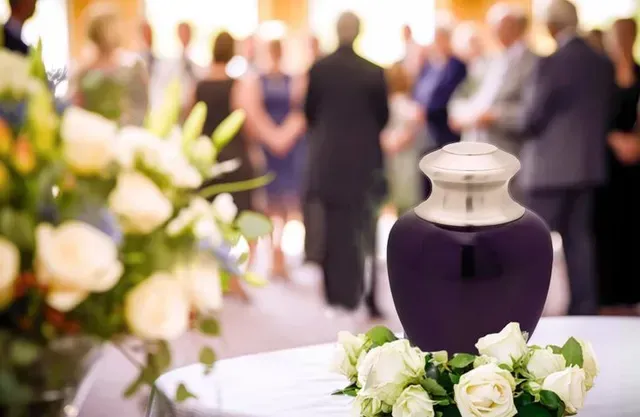
Inspiring quotes to guide you through your grieving journey

Grief can be the most complex time in a person’s life. It may often be difficult to find the peace and strength to move forward during such a dark time, and we may find ourselves feeling lost in our own emotions. However, it is important to remember that we are never alone in our sorrow.  A quote can help us put our thoughts into perspective and help us to find a sense of commonality when we discover our feelings and experiences match someone else’s. 

Here we have compiled our top quotes about grief, coping and life after loss to help guide you through your grieving process.

1. To live in hearts we leave behind is not to die.” –Thomas Campbell

2. “At the blueness of the skies and in the warmth of summer, we remember them.” –Sylvan Kamens & Rabbi Jack Reimer

3. “Do you not know that a man is not dead while his name is still spoken?” -Terry Pratchett

4. “All the fine art of living lies in a fine mingling of letting go and holding on.” –Havelock Ellis

5. “I’ll be seeing you in all the old familiar places that this heart of mine embraces all day through.” –Billie Holiday

6. “You gave me a forever within the numbered days…” –John Green

7. “No one ever told me that grief felt so like fear.” –C.S. Lewis

8. “The deeper that sorrow carves into your being, the more joy you can contain.” –Khalil Gibran

9. “Well, every one can master a grief but he that has it.” –William Shakespeare

10. “As a doctor, grieving is a natural part of medicine.” –Siddhartha Mukherjee

11. “Tears shed for another person are not a sign of weakness. They are a sign of a pure heart.” –José N. Harris

12. “Only people who are capable of loving strongly can also suffer great sorrow, but this same necessity of loving serves to counteract their grief and heals them.” – Leo Tolstoy

13. “Grief can be a burden, but also an anchor. You get used to the weight, how it holds you in place.” – Sarah Dessen

14. “It takes strength to make your way through grief, to grab hold life and let it pull you forward.” –Patti Davis

15. “Sometimes it’s ok if the only thing you did today was breathe.” –Yumi Sakugawa

16. “To have been loved so deeply, even though the person who loved us is gone, will give us some protection forever.” –J.K. Rowling

17. “Some things in life cannot be fixed. They can only be carried.” –Megan Devine

18. “Grief is just love with no place to go.” –Jamie Anderson

19. “How lucky am I to have something that makes saying goodbye so hard.” –A.A. Milne

20. “May love be what you remember most.” –Darcie Sims

June 22, 2026
What are the first steps when a loved one passes away? The first step is to notify the proper authorities. If your loved one passes at home, you’ll need to contact emergency services. If the passing occurs in a hospital or care facility, staff will guide you through the next steps. Once this has been done, you can contact a funeral home. Our team is available to help you begin arrangements and coordinate transportation of your loved one into our care. Do I need to plan the funeral right away? While some decisions need to be made relatively quickly, you do not have to finalize every detail immediately. We will help you prioritize what needs to be handled first and give you time to consider the more personal elements of the service. What types of funeral services are available? There are several options available depending on your preferences, beliefs, and budget. These may include: Traditional funeral services with a viewing and burial Memorial services (held after burial or cremation) Graveside services Celebration of life Cremation services with or without a formal ceremony We are here to help you create a meaningful service that reflects your loved one’s life. How much does a funeral cost? Funeral costs can vary widely depending on the services and options selected. Factors that may influence cost include: Burial or cremation choice Casket or urn selection Venue and staffing Transportation Printed materials and flowers We are committed to transparency and will walk you through all options to help you make decisions that align with your needs and budget. Can I personalize the service? Absolutely. Personalization is one of the most meaningful parts of a funeral service. Families often include: Favorite music or readings Photo displays or memory tables Video tributes Special themes or colors Cultural or religious traditions Our goal is to help you create a service that truly reflects your loved one’s personality and legacy. What should I bring to the arrangement meeting? It’s helpful to bring: A recent photo of your loved one Clothing for burial or cremation Personal information (full name, date of birth, Social Security number, etc.) Military discharge papers (if applicable) Preplanning documents (if arrangements were made in advance) Don’t worry if you don’t have everything—we can guide you through what’s needed. What is preplanning and is it necessary? Preplanning allows individuals to make their own funeral arrangements in advance. While it is not required, it can ease the burden on loved ones and ensure that personal wishes are honored. Many families find comfort in knowing these decisions have already been made. What happens after the service? After the service, we continue to support families by: Assisting with necessary paperwork Providing grief resources Helping coordinate burial or cremation follow-up Offering guidance on memorialization options Our care does not end after the service—we are here for you in the days and months that follow. We’re Here to Help Planning a funeral is never easy, but you don’t have to do it alone. Our compassionate team is here to answer your questions, guide you through each step, and help you create a meaningful tribute for your loved one. If you have additional questions or would like to begin planning, please don’t hesitate to reach out.
May 27, 2026
When you are considering cremation for your own future plans or those of a loved one, it is important to understand the safeguards that our funeral home has in place to maintain the integrity of the cremation process. A detailed and well-documented process means that families can be assured that the cremated remains returned to them are those of their loved one. At our funeral home, we have a high standard of professional ethics and detailed procedures regarding the cremation process. We have our own on-site crematory at our Southwest Louisville Chapel, so your loved one will never leave our care. Multiple steps are taken to maintain an individual’s personal identity throughout the process. An identification band is placed on them the moment they are brought into our care. A funeral director and members of the family will review all cremation paperwork prior to cremation. Families have the option to view their loved one before cremation takes place for a final goodbye. When the time comes for cremation, a numbered stainless steel identification tag will be placed with the deceased which stays with them through the cremation process. This information will be entered into our funeral home’s permanent record. Family members have the option to witness the beginning of cremation, or stay for the duration of the process, if desired. After cremation is complete, the stainless steel identification tag will stay with the cremated remains, which will be placed in the urn or container that the family has selected. When it is time to return the remains to the family, we will confirm that the person receiving the remains is authorized to do so, and photocopy their photo ID to further ensure the integrity of the process. With these safeguards in place, you can have confidence that if you choose our funeral home, your loved one will be cared for with dignity and respect, and their personal identity is maintained every step of the way. If you have any questions, please do not hesitate to reach out to us. We are here to help.
April 13, 2026
In recent years, the phrase “celebration of life” has become more common when families are planning services for a loved one. While many people have heard the term, there can still be confusion about what it truly means and how it differs from a traditional funeral. At its heart, a celebration of life is not about replacing tradition, but about offering a more flexible, personalized way to honor and remember a life. A celebration of life is a personalized service that focuses on honoring the unique story, personality, and legacy of the individual who has passed. While it can be held in a variety of locations, many families choose to gather in the comfort of a funeral home chapel, where they have both guidance and the ability to customize the experience. These services most often take place after cremation, which allows families more time to plan and create a meaningful tribute. However, every family’s preferences are different, and services can be arranged in whatever way feels most appropriate. No two celebrations of life are exactly the same, because no two lives are the same. One of the most meaningful aspects of a celebration of life is the ability to incorporate personal touches that reflect the life being honored, even within a chapel setting. Families may choose to include themed elements that represent a loved one’s passions, hobbies, or personality. This could be as simple as displaying favorite photos and memorabilia, or as unique as incorporating colors, music, or décor that reflect what they loved most in life. Memory tables, tribute videos, and customized music selections can all be seamlessly incorporated into a chapel service. Some families also invite guests to participate by sharing stories or bringing items that hold special meaning. This blend of personalization within a supportive, structured environment often provides both comfort and creativity during a difficult time. A celebration of life offers families the opportunity to gather in a familiar, supportive setting while creating a service that truly reflects their loved one. By combining the comfort of a chapel with the flexibility of personalization, it becomes a meaningful way to honor a life and share memories with those who matter most. There is no right or wrong way to plan a service. The most important thing is creating a space that feels genuine, supportive, and reflective of the person being remembered.
March 2, 2026
Many of us take our freedoms for granted, but our staff proudly acknowledges the sacrifices made by those who have served our country through their patriotism, love of country and willingness to protect others. We are committed to providing quality service and professional assistance to help families complete the necessary forms to obtain benefits that are provided through the United States Department of Veterans Affairs (VA). Here are some frequently-asked questions about benefits. What kinds of benefits are available? Granted to eligible Veterans in appreciation for the service they have provided for our country, benefits can include a burial allowance to help cover the burial, funeral and transportation costs associated with the deceased’s services and disposition. For those being buried in a national cemetery, survivors can receive assistance with the burial and funeral costs, the plot or internment, and the transporting of the veteran’s remains for burial. Additionally, Veterans may be eligible for a military funeral honors and committal service, and memorial items such as a cemetery headstone, marker, medallion, Presidential Memorial Certificate, plaque, or urn. Specific qualifications will need to be met to receive these benefits and memorial items. Who qualifies for burial benefits and burial in a national cemetery? Veterans, service members, spouses, and dependents may be eligible for burial in a VA national cemetery, as well as other benefits, if they meet one of the general requirements listed below. For complete requirements, please visit the VA burials and benefits page , and find a local VA national cemetery here . · A veteran who didn’t receive a dishonorable discharge · A service member who died while on active duty, active duty for training, or inactive duty for training · The spouse or minor child of a veteran, even if the veteran died first · In some cases, the unmarried adult dependent child of a veteran What are military funeral honors and a committal service? Military funeral honors include the playing of “Taps,” a rifle detail, a color guard and uniformed service members who properly fold and present the United States flag to the grieving family. These flags are typically given to the deceased’s next of kin or close friend. In order for the survivors to qualify to receive the burial flag, the veteran or reservist must be described by at least one of the following: · Served in wartime · Died while serving on active duty after May 27, 1941 · Served after January 31, 1955 · Served in peacetime and left military service before June 27, 1950, after serving at least one enlistment or because of a disability that was caused - or made worse - by their active military service · Served in the Selected Reserves, or served in the military forces of the Philippines while in service of the United States and died on or after April 25, 1951. As a Veteran, how do I apply for benefits? You can apply to find out in advance if you’re eligible for burial in a VA national cemetery. This is called a pre-need determination of eligibility—and it can help make the burial planning process easier for your family members in their time of need. Learn how to apply for a preneed determination of eligibility. As a surviving family member, how do I apply for benefits? As a surviving family member, you must file a claim for a non-service-connected burial allowance within two years after the veteran’s burial or cremation. There is no time limit to file for a service-connected burial, plot or interment allowance. You can apply online or by mail after completing the VA Form 21P-530. A veteran who didn’t receive a dishonorable discharge or a service member who died while on active duty may be eligible for a headstone or marker if they meet certain requirements. To find out if your deceased loved one qualifies for a cemetery marker and to apply, visit this site . For more information regarding VA burial benefits and memorial items, visit the VA's website or call the VA office at 1-800-827-1000.
More Posts »

More Resources & Support